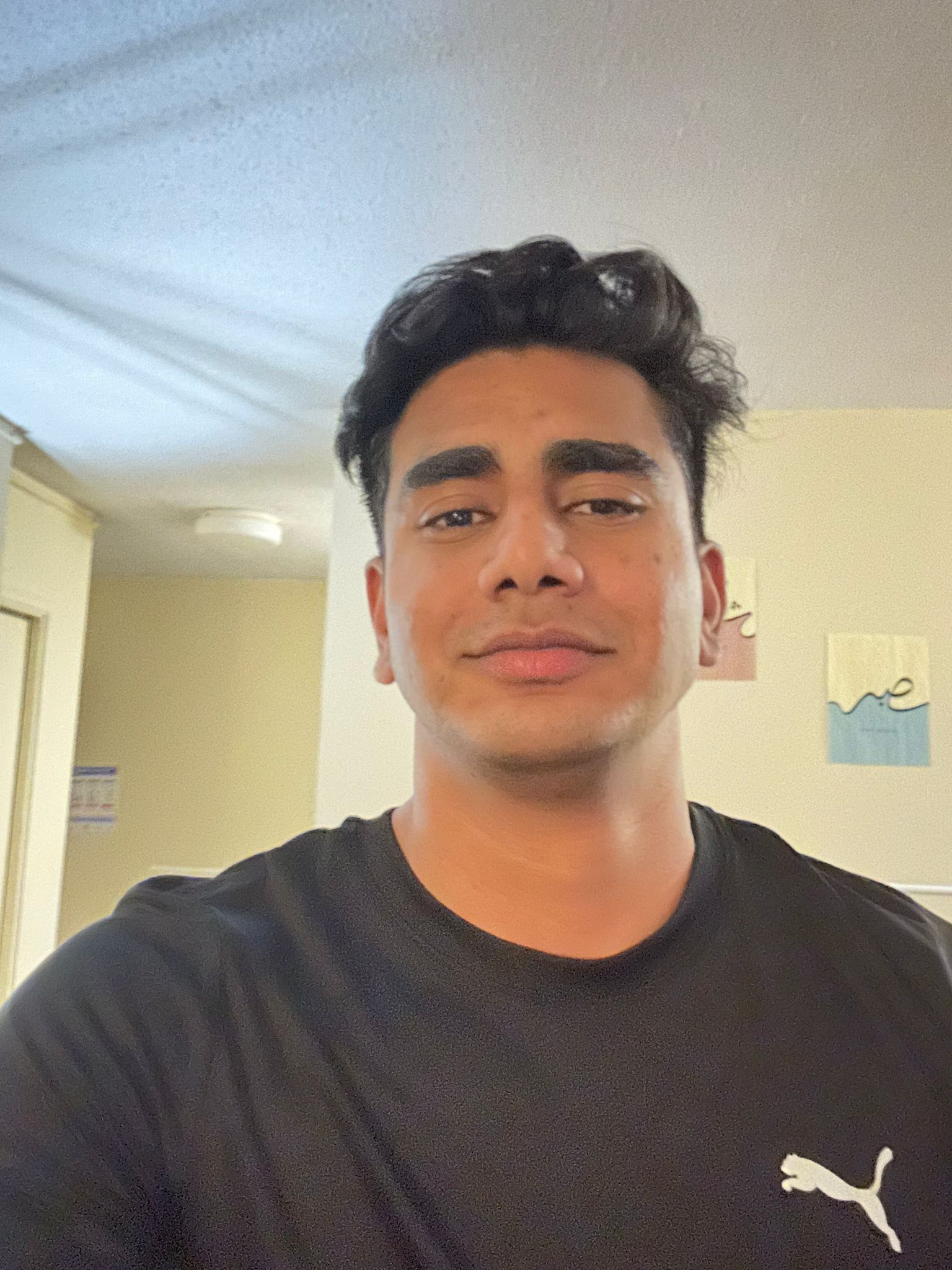
Abdullah TauqeerI am an AI Researcher & Engineer specializing in the intersection of Computer Vision and Large Language Models (LLMs). My work ranges from building robust deep learning pipelines for medical imaging (tumor detection, semantic segmentation) to designing production-grade Retrieval-Augmented Generation (RAG) systems and Agentic workflows. I am passionate about tackling complex problems across multiple modalities, combining rigorous research evaluation with scalable, real-world deployment. Email / Google Scholar / GitHub / LinkedIn |
|
LLM/GenAI Focus
I build LLM systems that are trustworthy, scalable, and aligned with real user needs. My focus areas include:
- RAG & Knowledge Systems: Designing retrieval pipelines, vector search, and document-grounded generation for accurate, up-to-date responses.
- Agents & Workflow Automation: Creating tool-using agents that can plan, execute, and verify tasks across APIs, files, and databases.
- Evaluation, Safety & Reliability: Building test harnesses, red-team suites, and monitoring to reduce hallucinations and measure quality over time.
Selected Projects
NLP/GenAI Projects
|
Zoom transcription, summarization, and action-item extraction
Uses Zoom webhooks to trigger a FastAPI backend, queues processing with Celery + Redis,
transcribes recordings via Whisper, summarizes with LangGraph, and stores results in
Postgres for a Next.js dashboard.
|
|
Enterprise RAG Copilot with human-in-the-loop agent actions
A production-ready RAG application featuring hybrid retrieval (BM25 + pgvector), role-based
access control (RBAC), audit logging, and safe agent execution that requires human approval
before tool actions. Includes built-in evaluation harnesses.
|
Computer Vision Publications and Projects
|
SERN-MIL:
Selective Embedding Retrieval & Nuclei-Feature Aggregation based MIL for Prostate
Gleason Grading
[GitHub]
Submitted to Nature Methods, 2025
Proposed a novel Multiple Instance Learning (MIL) approach that leverages selective
embedding retrieval to improve the accuracy and interpretability of prostate cancer grading.
|
|
Detection,
Localization, and Staging of Breast Cancer Lymph Node Metastasis on Whole-Slide
Images
[GitHub]
Scientific Reports, accepted 2025
Developed a weakly supervised framework for precise metastasis detection in lymph nodes,
achieving state-of-the-art performance on gigapixel pathology slides.
|
|
EMBC 2025, accepted
Designed a hybrid encoder-decoder architecture for robust nuclei segmentation that
generalizes well across varying stain protocols and scanner types.
|
|
Live-Cell Time-Lapse Microscopy
An application designed for tracking live cells in time-lapse microscopy to analyze cell
morphology and motility under varying conditions.
|
|
Digital Pathology Utility
Custom algorithmic tool for seamless image stitching of Hematoxylin and Eosin (H&E) stained
images from in-lab microscopic scanners.
|
Skills
Experience
|
Research Engineer
May 2025 - Present • Toronto, Ontario, Canada
Build performance-optimized computer vision pipelines for live-cell tracking in time-lapse
microscopy, enabling quantitative analysis of cell morphology and motility relevant to
cancer progression. Work with high-resolution imagery and large temporal datasets, focusing
on efficient preprocessing, robust inference, and reproducible evaluation across staining
protocols. Package cutting-edge workflows in Docker for consistent runs across environments,
and optimize for real-time constraints using GPU-aware parallelism.
|
|
Graduate Researcher
Sep 2023 - Present • Toronto, Ontario, Canada
Developed a novel deep learning framework for pathological nodal (pN) staging of breast
lymph nodes, integrating nuclei features via LLMs, achieving a 4% improvement in F1 score.
Designed a MaxViT-based H&E nuclei segmentation/classification network boosting F1-scores by
5.6%. Currently advancing prostate Gleason scoring using whole-needle biopsies with
selective embedding filtering networks and attention-based MIL pooling. Proficient in
PyTorch, solving bottlenecks on massive multi-resolution gigapixel WSIs.
|
Education
|
Master of Applied Science, Electrical & Computer Engineering
Grade: A
Sep 2023 - Jul 2025 • Toronto, ON
Co-supervised by Dr. Ali
Sadeghi-Naini and Dr. Amir Asif.
Focus: Developed deep learning models for histopathology images to translate computational methods into actionable clinical and scientific insights. |
|
Bachelor of Electrical Engineering
CGPA: 3.7 / 4.0
Sep 2019 - Jul 2023 • Islamabad, Pakistan
|